Spindle Motor Control in Modern CNCs: Stepper, Servo, and VFD Options
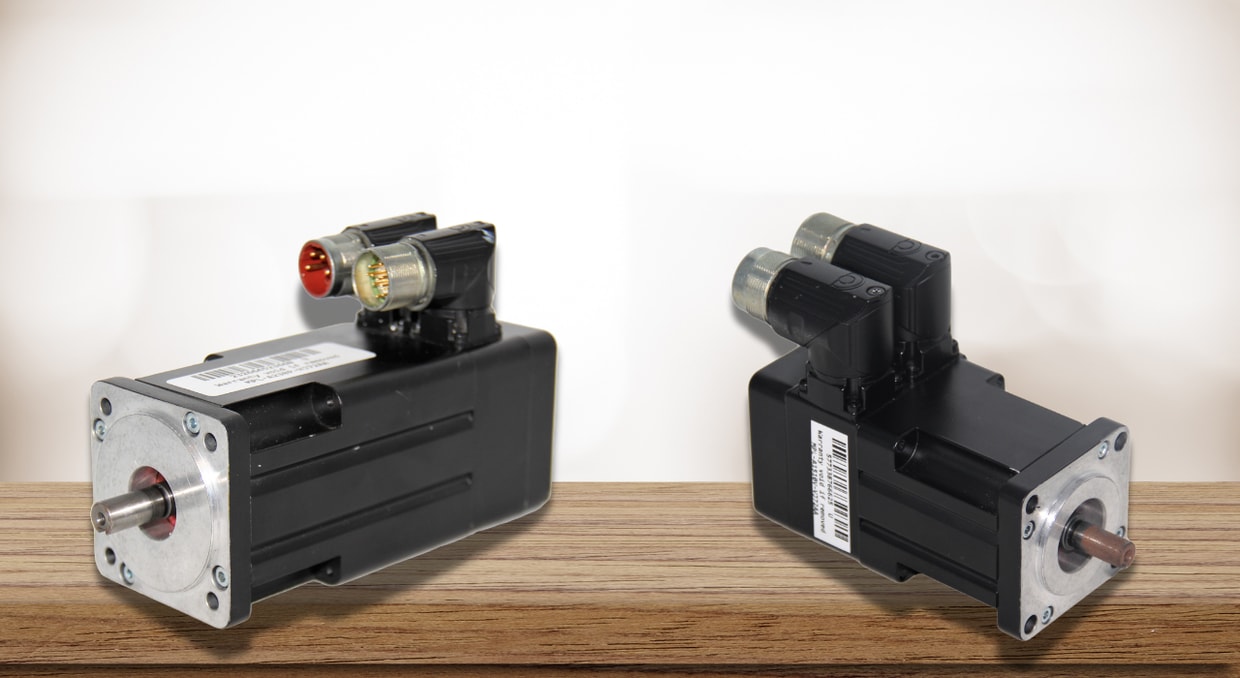
Over the years, spindle motors have come a long way, from brute-force systems to finely tuned systems that balance torque, speed, and feedback with almost surgical precision. The trio leading this charge is stepper motors, servo motors, and variable frequency drives (VFDs). Each represents a different philosophy of motion: one steps with mechanical certainty, one reacts with sensory feedback, and the last bends AC power to its will.
Choosing between these different motors isn’t about picking the latest and most expensive, but rather about what would fit the job at hand. After all, milling aluminum molds, engraving circuit boards, or turning precision shafts all place different demands on torque stability, acceleration, and accuracy. Understanding how each control method meets those demands separates a good CNC build from a great one.
Precision and Simplicity with Stepper Motors
Before encoders, feedback loops, and tuning parameters even came into light, stepper spindle motors provided dependable and accurate motion that you could (literally) count on for spindle motors. A stepper spindle motor works because each pulse sent to it counts as one fixed rotation. A standard 200-step motor rotates 1.8° per step. Feed it 200 pulses, and it spins exactly one revolution. That predictability made early CNC machines easy to build and control, especially when paired with open-loop drivers.
Why Choose Stepper Motors?
One big reason people spring for stepper spindle motors is their low cost. Since stepper spindle motors are used in open-loop systems, there’s no need for positional or torque feedback devices. In addition, because they have excellent low-speed torque (and provide full torque at standstill), the motor can drive many loads without additional gearing or a gearbox, making the system even cheaper. Finally, stepper spindle motors are known for their reliability due to their brushless design.
Why You Might Look Away
While these motors have been around for a very long time, technology progresses, and better options begin to surface. One point of contingency is that servo spindle motors tend to be more accurate than stepper spindle motors. Another point is that there is no feedback loop to indicate whether a step is missed. Then there is the fact that stepper spindle motors can be very noisy at higher speeds.
Mastering Feedback with Servo Motors
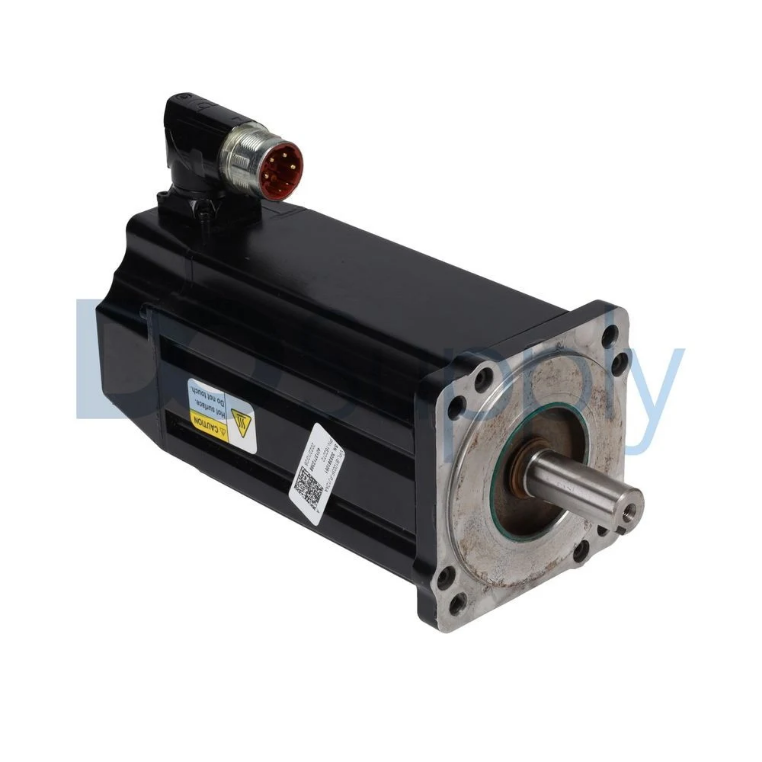
Stepping into servo spindle motors allows the user to use a closed-loop feedback system for better accuracy. This is because position, velocity, and torque can be measured in real time, rather than following blind commands like open-loop systems. At the heart of a servo spindle system is the encoder. Mounted to the shaft, it continuously reports how far and fast the motor turns. The controller then compares that feedback to the target position and adjusts the drive current accordingly. Servo spindle motors also come in both AC and DC platforms, though modern CNCs almost always favor AC servos for their efficiency and durability.
What You Gain
As mentioned before, the closed-loop feedback system gives servo spindle motors an upper edge over stepper spindle motors. It uses an encoder to continuously report its position and speed, enabling micro-adjustments on the fly. This results in remarkably stable cutting performance. Another benefit of servo spindle motors is their speed. Unlike stepper systems, which lose torque as RPM increases, servos maintain usable torque across a broad range. That means a spindle can start at a crawl for threading operations and then ramp to thousands of RPM for polishing, all under the same drive system.
The acceleration and deceleration profiles are also smoother, reducing mechanical wear and vibration. Finally, servos offer scalability. Engineers can tailor response characteristics to the machine’s mass, stiffness, and cutting behavior through careful tuning and drive configuration. In multi-axis CNC systems, this fine control enables coordinated motion between the spindle and feed axes.
What You Give
While servo spindle motors demand respect, they also demand patience. Their complexity is both their greatest strength and weakness at the same time. Setting up a servo system requires tuning proportional, integral, and derivative gains to balance responsiveness and stability. If you get it wrong, the spindle might oscillate, overshoot, or hum from feedback resonance. It’s a level of adjustment that open-loop systems never have to worry about.
Cost is another consideration, as the encoder, drive, and power supply could exceed the budget of small CNC projects. So, while a servo-controlled spindle offers unmatched responsiveness and accuracy, it does so at a higher technical and financial entry point.
Harnessing the Power of Frequency with VFDs
Our last contender for this article is VFD spindle control. VFDs control three-phase AC induction or synchronous motors, which are the most common type of CNC spindle motor. Rather than commanding exact positions or relying on encoder feedback, the VFD adjusts the frequency and voltage of the motor to control its speed and torque. This approach gives VFDs several key advantages.
The Pros of VFD Spindle Motor Control
One of the most notable pros of VFD spindle motor control is its energy efficiency. They vary the voltage and frequency to match the load to avoid wasting power as heat. They also offer soft-start capability, which ramps the motor speed gradually instead of jolting it to life, reducing inrush current and extending bearing life.
Another benefit is control flexibility. Modern VFDs can handle both constant-torque and variable-torque applications, adapting to different cutting materials and spindle designs. They can integrate with control systems via analog signals, digital I/O, or communication protocols such as Modbus or EtherNet/IP, allowing the CNC controller to set speeds on the fly. Some models even feature sensorless vector control, which estimates rotor position in real time to deliver servo-like torque consistency without an encoder.
The Cons of VFD Spindle Motor Control
Of course, VFDs have limits. They control speed beautifully, but they don’t inherently manage position. When precision down to microns is required, servos still win. And while sensorless vector control helps, it’s not perfect under rapid load fluctuations or at very low speeds. Yet for most spindle applications where rotational speed matters more than absolute position, a well-matched VFD system delivers an elegant balance between performance and practicality.
Matching Control to the Job
Like any automation equipment, matching the equipment to the job is important. Each control type fills a specific niche in CNC design, shaped by cost, precision, and performance demands. Let’s look at where each one shines once the machine moves from the blueprint to the workshop floor.
Where Steppers Excel
Stepper-driven spindle motors dominate in smaller or budget-minded machines that favor simplicity and reliability. Think desktop routers, engraving machines, and hobby-grade mills, which use stepper systems for both axes and spindle motion. This is because they are easy to wire and inexpensive to replace. Their high holding torque makes them particularly handy in setups that pause often, like circuit board engraving, small woodcarving routers, or prototyping mills that rely on frequent tool changes.
When Servos Take Over
This is a step up into industrial-grade CNC territory, where the spindle motor is likely to be servo-controlled. These systems depend on performance rather than simplicity and are fit for applications such as high-speed machining centers, die and mold production, or aerospace parts fabrication. These machines must maintain precise spindle speeds under varying loads, and servos handle that dynamic balancing effortlessly.
Where VFDs Rule
These systems are the workhorses of production lines, especially in machining centers that demand high speed and power rather than fine positioning. A VFD paired with an induction or synchronous motor can run at speeds ranging from a few hundred to tens of thousands of RPM, making it ideal for continuous-duty applications such as grinding, drilling, and large-scale milling. VFD systems also excel in harsh and heavy-duty applications due to their reliability, sealed housing options, cooling systems, and overload protection.
Final Thoughts
CNC machines are versatile tools in manufacturing and serve many roles. Each spindle motor will fill a role better than another, and as vague as that sounds, it really does depend on what you want to do with yours, how much you’re willing to spend, or the limitations of your machine’s chassis.
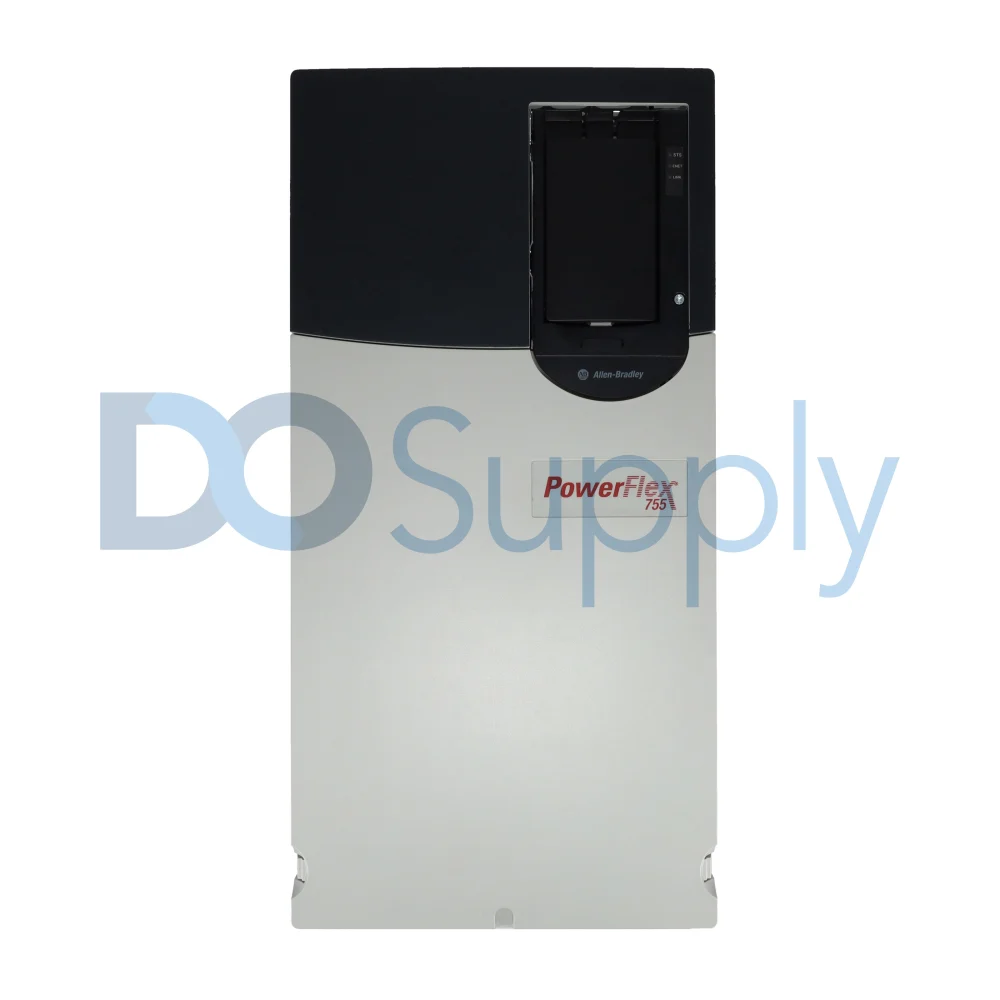
While we don’t specialize in CNC machines directly, we shine in automation equipment and motors. If you are looking to pick up a VFD system paired with a drive for your setup, we have many options within the PowerFlex series by Allen-Bradley. We also carry servo and stepper motors to fit other systems. If you’re not sure what to get, give us a call, and our team of experts will help you find just what you need.
DO Supply Inc. makes no representations as to the completeness, validity, correctness, suitability, or accuracy of any information on this website and will not be liable for any delays, omissions, or errors in this information or any losses, injuries, or damages arising from its display or use. All the information on this website is provided on an "as-is" basis. It is the reader's responsibility to verify their own facts.