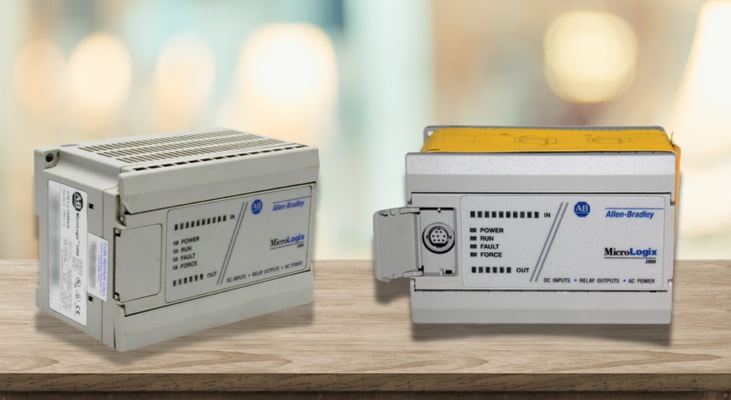
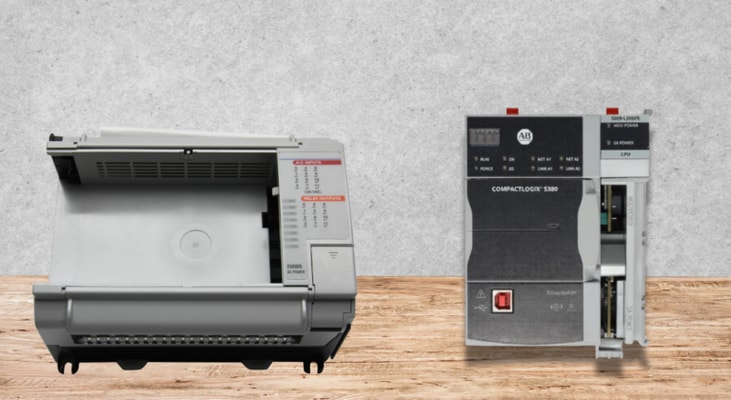
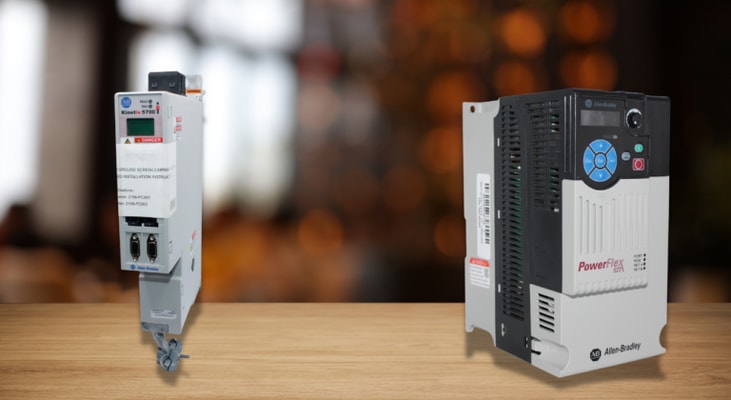
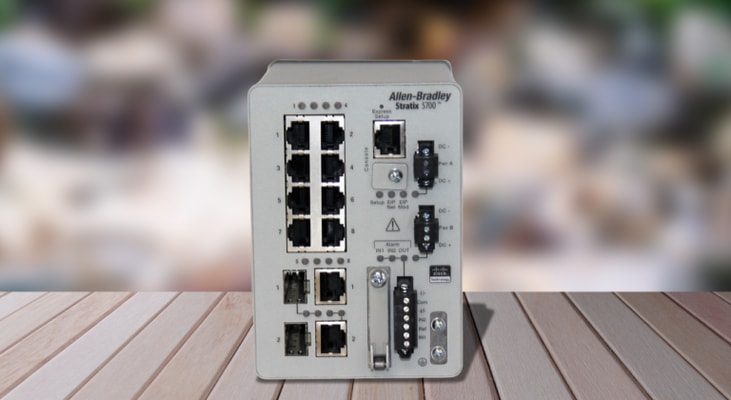
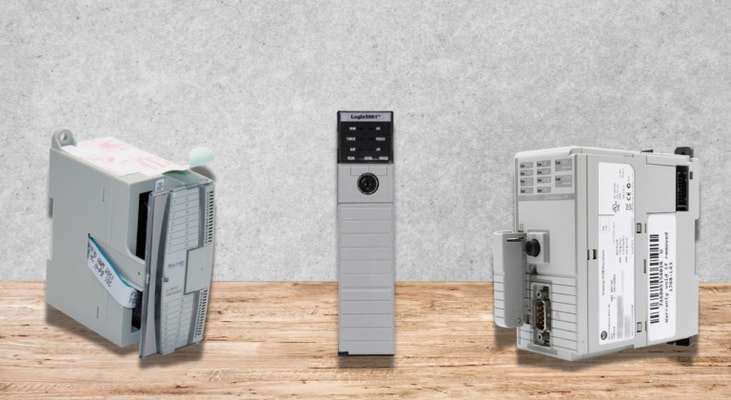
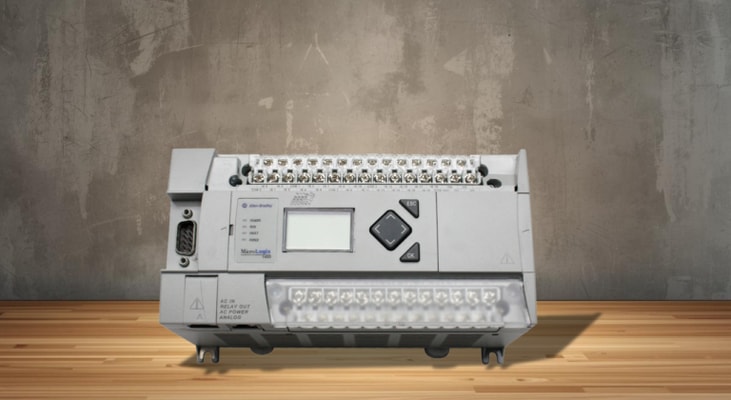
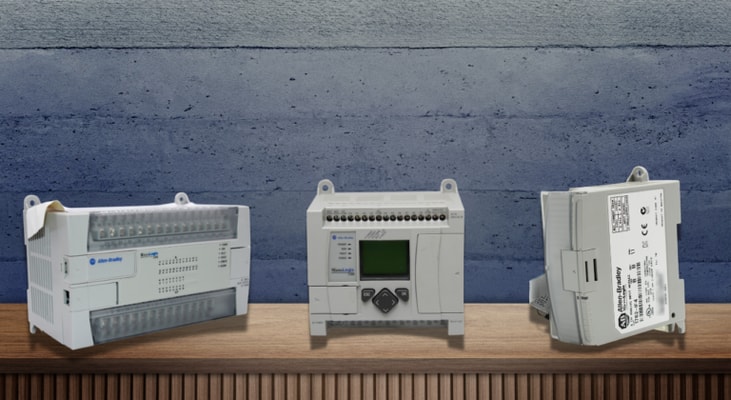
The Allen-Bradley MicroLogix 1000 has been around the block for a while, long enough to be a seasoned veteran before some of today’s engineers even start their first internship. Rockwell Automation has since discontinued the line, but if you’ve spent any time in the field, then you know that “discontinued” doesn’t mean gone. In fact, these little fixed I/O controllers are still working in packaging lines, HVAC systems, conveyor controls, and countless other applications where they were originally installed and never gave anyone a reason to rip them out. That being said, there are still several reasons to pick these controllers for your project. Whether you’re sourcing a drop-in replacement for an existing system or maintaining a fleet of legacy machines, this guide is for you. We’ll walk through the part number system, the different I/O configurations, power supply options, and output types so you can confidently select the right MicroLogix 1000 for your application. Source MicroLogix...
If you have ever felt the urge to overbuild a system, whether it be a car, a gaming pc, or on the industrial side of things, OEM systems or shop-mounted automated solutions, don’t worry, because we have all been there. The reality is that building to spec in industrial machines that aren’t likely to see upgrades or changes is okay. Not only will this save time and reduce complexity, but it will also save money, space, and wiring. This is the philosophy that Allen-Bradley used to design its MicroLogix PLC lineup. Sure, the MicroLogix is considered a legacy system, but it is still used in numerous applications today. Today, we will go over where these PLCs fit and why their size may be all you need. Shop for MicroLogix 1100 PLCs Here First on the list is packing machines since they operate on simple, repeatable sequences. Because of the straightforward nature of this control logic, these machines rarely require the processing power or system architecture of a larger PLC platform. A...
Programmable Logic Controllers continue to be the backbone of present-day industrial automation, providing deterministic, scalable, and reliable control across diverse sectors, such as chemical processing, oil & gas, pharmaceuticals, manufacturing, and water/waste treatment facilities. Originally designed to replace hard-wired relay logic systems, PLC technology has advanced into sophisticated embedded control platforms capable of handling advanced computational tasks, real-time data analytics, network communications, and predictive diagnostics. In response to the demands of digital transformation, industry 4.0 integration, and smart manufacturing, PLC manufacturers are continually developing robust PLCs with increased processing power, built-in safety options, advanced networking protocols, and integrated cybersecurity. In essence, modern PLC hardware continues to bridge the gap between industrial-grade robustness and advanced computing, taking on complex, data-intensive automation...
PLCs are the main part of industrial automation systems, providing the real‑time control required for manufacturing, process systems, infrastructure networks, and different building management systems. PLCs help in managing the automation ecosystems. Nowadays, the leading PLC brands do more than just supply simple hardware; they build full‑scale ecosystems encompassing software, communication protocols, add‑on input/output modules, cloud services, engineering software, different partner networks, and digital platforms that enhance performance, connectivity, and lifecycle value. In this technical overview, we investigate how top PLC brands create ecosystems surrounding their controllers. We analyze the functions of hardware modularity, programming platforms, communication protocols, digital twins, edge and cloud integration, cybersecurity, analytics, partner initiatives, and deployment assistance demonstrating how ecosystems facilitate scalability, optimization, and future‑proofing in...
Modernizing industrial automation requires balancing technological innovations with operational continuity. Critical infrastructure — including water treatment/waste management facilities, oil refineries, electricity-generating plants, pharmaceutical production lines, and manufacturing plants — continues to rely on legacy programmable logic controllers, often in service for 20 to 30 years. Unlike the rapid turnover and short lifetimes of consumer electronics, PLC-based industrial control systems prioritize deterministic execution, environmental and operational resilience, and structural longevity for multi-decade stability. This creates a unique engineering challenge for PLC manufacturers, who must deliver technical enhancements in processing power, connectivity, data analytics, and cybersecurity, while maintaining strict backward compatibility with decades-old PLC hardware and firmware. Industrial automation infrastructure, including PLC control systems, is inherently...
CNC machine parts work together as a precisely coordinated system in modern manufacturing. From ball screws and linear guides to encoders and servo motors, each component plays a critical role, but none more so than the drive system that commands motion. Among the many brands trusted by manufacturers worldwide, Allen Bradley (a Rockwell Automation brand) has become synonymous with reliable, high-performance drive technology. This article explores how Allen Bradley drives integrate with spindle motors and other CNC machine components to deliver the precision and operational uptime that today’s industrial automation demands. CNC machines are complex assemblies of mechanical, electrical, and software components. To understand how drives fit into the architecture, we must understand the major categories of CNC machine parts and their roles. The mechanical backbone of any CNC machine includes: Spindle assemblies: The rotating shaft that holds cutting tools or workpieces Ball screws and...
When it comes to industrial networking, the hardware has to be built for a completely different world than that of commercial equipment. Take temperature ranges as a good example: industrial devices must operate between -40°C and +85°C, while commercial units are typically rated only from 0°C to 45°C. Physical environment matters just as much, with ingress protection ratings indicating how well a device can withstand dust, moisture, and oily conditions. If the hardware is going anywhere near active machinery, vibration resistance deserves careful attention, too, since it can cause real problems over time if it’s overlooked. This guide walks through the key hardware categories, including switches, gateways, and media converters, to help you make confident, informed decisions for your application. Industrial switches form the backbone of industrial networks for most plant floors. They connect controllers, drives, sensors, HMI, and supervisory systems while maintaining the deterministic...
Allen-Bradley and its Logix controllers have been around since the dawn of PLCs. Today, they are found running the very factories that produce objects you use in your daily life. Each Logix family of controllers was designed to fill a role that emerged as automation adoption increased, from small-form-factor controllers to fit OEM designs to powerhouses that control hundreds of I/O points. Though going through each of them to understand what they can do or where they fit may be a daunting task, we’re here to make it as easy as possible, starting with the MicroLogix. The Allen-Bradley Micrologix PLC family occupies a very specific place in the Allen-Bradley PLC lineup. These PLCs were designed for machines and processes that demanded reliable, deterministic control, without the extra overhead and costs associated with larger platforms. The main idea is self-contained, compact control without complexity. Because of this, these controllers integrate the processor, power supply, and I/O...
Programmable logic controllers process two fundamental categories of field signals: analog inputs and digital inputs. Each signal type has distinct electrical characteristics, wiring requirements, module architecture, and failure behavior. When faults occur on either input type, the diagnostic approach differs significantly. Engineers and technicians who understand the behavior of analog vs. digital input systems are better positioned to identify faults quickly and implement corrections. This article provides a structured technical framework for troubleshooting analog input vs digital input errors in PLC systems. A digital input signal is binary in nature. The field device, such as a pushbutton, proximity sensor, limit switch, or relay contact, produces either a voltage-present or voltage-absent condition. The PLC digital input module interprets this as a logic-1 or logic-0 state. Most digital input modules operate at 24VDC. The module contains optical isolation circuitry that...
Industrial control systems used in hazardous or toxic industrial environments require significantly more rugged designs and higher environmental ratings than those used in conventional factory automation. These environments may contain corrosive vapors, conductive dust, explosive gases, high humidity, strong electrical noise (RFI/EMI), and extreme temperatures. Common examples include combustible-dust facilities, offshore oil and gas platforms, pharmaceutical synthesis plants, chlorine-based water treatment systems, fertilizer production sites, underground mines, and hydrogen processing facilities. Under such conditions, a control system malfunction is not merely a production issue but also a potential safety hazard to personnel, infrastructure, and the surrounding environment. For this reason, Programmable Logic Controllers (PLCs) deployed in hazardous facilities must meet strict environmental and international standards governing functional safety, durability, and explosion...
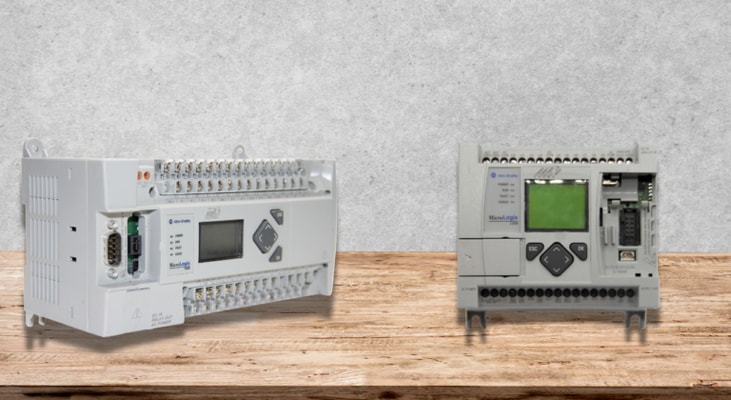
MicroLogix is a line of compact programmable logic controllers developed by Allen-Bradley, a Rockwell Automation brand. These controllers are engineered for applications that require reliable discrete and analog control within constrained panel space and limited budgets. Across industries such as packaging, HVAC, and OEM machine building, MicroLogix has established itself as a practical control solution. This article examines how MicroLogix controllers are deployed across these three application domains, covering the specific control functions they perform, the hardware features that make them suitable, and the engineering considerations that come with selecting and implementing them. The MicroLogix family includes five primary models: the 1000 , 1100 , 1200 , 1400 , and 1500 . Each model varies in I/O count, memory capacity, communication capabilities, and processing speed. The MicroLogix 1000 is the most basic, handling simple relay-replacement tasks with fixed I/O. The MicroLogix...
Industrial automation has historically depended on hardwired communication infrastructure. Field devices, controllers, drives, and supervisory systems have been interconnected using copper cables, fiber-optic cables, and structured wiring systems, which require significant installation labor, conduit routing, and ongoing maintenance. While wired communication remains the dominant architecture in most facilities, wireless communication technologies have matured to a point where they are now viable, and in many cases preferred, for specific automation applications. This article examines the wireless communication technologies applicable to industrial automation, the protocols and standards governing their operation, the engineering challenges associated with deployment, and the application domains where wireless communication delivers measurable advantages over traditional cabling infrastructure. The shift toward wireless communication in industrial settings is not driven solely by...
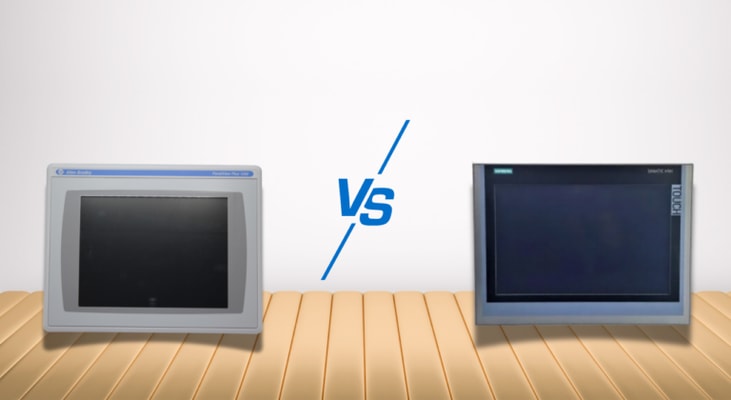
In industrial automation, the Human-Machine Interface (HMI) functions as a crucial link between human operators and complex control systems. The selection of an HMI platform is a critical decision with significant implications for operational efficiency, system integration, lifecycle costs, and long-term support. When selecting a suitable Human-Machine Interface (HMI), engineers frequently have to choose between a vendor-specific solution, such as the Allen-Bradley PanelView series, and a hardware-agnostic generic HMI. The Allen-Bradley PanelView HMIs are premier operator interface terminals from Rockwell Automation designed to monitor and control devices that are connected to a controller, as well as display information as needed. They are available in different forms, ranging from small keypads to large, high-performance touchscreen LCDs. They are a key element of the Allen-Bradley Integrated Control Architecture for industrial automation, which allows seamless integration of...
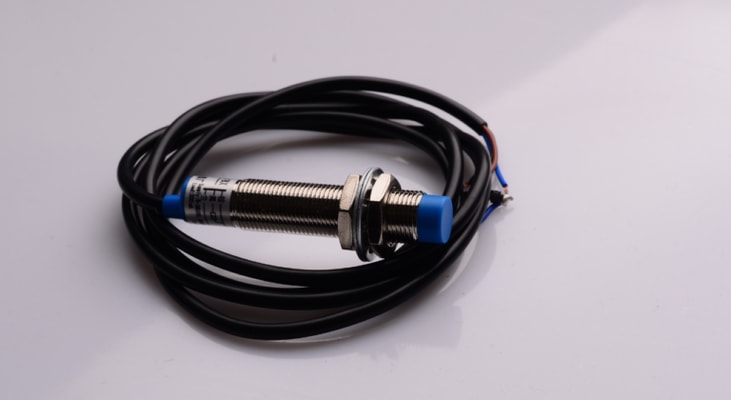
In the modern world, sensors are quite literally everywhere you see. Whether it’s the gyroscope in your phone detecting when you’ve lifted it so it can turn the screen on, or the TPMS in your car’s tires alerting you to low air pressure, sensors constantly translate the physical world into something machines can understand. A sensor, in the broadest term, is a device that connects the physical world to its digital counterpart. It responds to a specific measurand, such as distance, pressure, light, or temperature, to give a usable output. Otherwise, how else would a machine know the temperature of ambient air, or the weight of a package sitting on a scale without elaborate mechanical linkages? While thousands of sensors are used in everyday life, in automation the scope of sensors narrows considerably. On the factory floor, most sensing tasks boil down to one core question: Is something there, and if so, where? In this guide, we focus on the most common and widely used sensor types:...
The MicroLogix controller series really hits that sweet spot for folks who need reliable automation in tight spaces, without blowing the budget. You’ve got five different models to pick from, each one tailored for different levels of complexity, but they all play nicely when it comes to programming. If you’re designing machines or building equipment, knowing the differences between these controllers isn’t just trivia—it shapes what you spend, how easily you can grow your system, and how much hassle you’ll deal with years down the line. Think of the MicroLogix 1000 as the no-nonsense starter in this lineup. It gives you the SLC 500 instruction set, but in a small, affordable package—perfect if you’re cranking out lots of the same machine and need solid, basic control. It’s quick on its feet, too, so it fits well in fast-moving jobs like sorting or packaging. You can get it with 10, 16, or 32 digital inputs and outputs, and some versions throw in analog I/O as well. Those models step it...