Critical Components of Industrial Automation: The Building Blocks of a Smart Factory
The manufacturing sector has transformed thanks to industrial automation, which has turned outdated factories into productive intelligence centers. The idea of “smart factories” has emerged due to these developments, where automation technology and networked systems function smoothly to optimize operations. In this post, we’ll look at the crucial elements that lay the groundwork for industrial automation and help to build a smart factory.
Modern methods and technologies are used in smart factories to simplify operations, boost output, and improve overall performance. These elements allow automation, data-driven decision-making, and seamless communication throughout the production floor.
By adopting industrial automation, manufacturers may gain from higher productivity, lower costs, better product quality, and increased safety. Agile manufacturing techniques, real-time monitoring, and predictive maintenance are all made possible by the integration of intelligent systems and technology.
Automation in manufacturing also helps businesses respond swiftly to consumer requests, maximize resource utilization, and adjust to changing market demands. In today’s changing business environment, smart factories open the door for increased flexibility, scalability, and competitiveness.
We will examine the revolutionary potential of these elements and how they work together to fuel the future of manufacturing as we dig into industrial automation and the fundamentals of a smart factory. Accepting automation enables enterprises to stay ahead in a globally competitive industry while also unlocking new levels of efficiency.
Now, we will be looking at some of the components that are the essence of Industrial automation:
Programmable Logic Controllers PLCs
The foundation of industrial automation is programmable logic controllers (PLCs), which offer a durable and dependable control system for efficiently running a smart factory. These adaptable gadgets provide various capabilities and incorporate cutting-edge technological elements that improve industrial operations. The ability of PLCs to carry out control logic is one of its key features. PLCs accurately manage process variables using complex algorithms like Proportional-Integral-Derivative (PID) controllers. PLCs guarantee precise control over critical factors like temperature, pressure, flow rate, and location by combining mathematical computations and feedback control loops. Sequential control is a strength of PLCs and is essential for automating complicated operations with complex timing constraints. PLCs may implement logical functions, timers, and counters to manage the precise sequencing of processes using ladder logic or structured text programming languages. By synchronizing numerous machines and equipment, this sequential control helps reduce downtime and increase production.
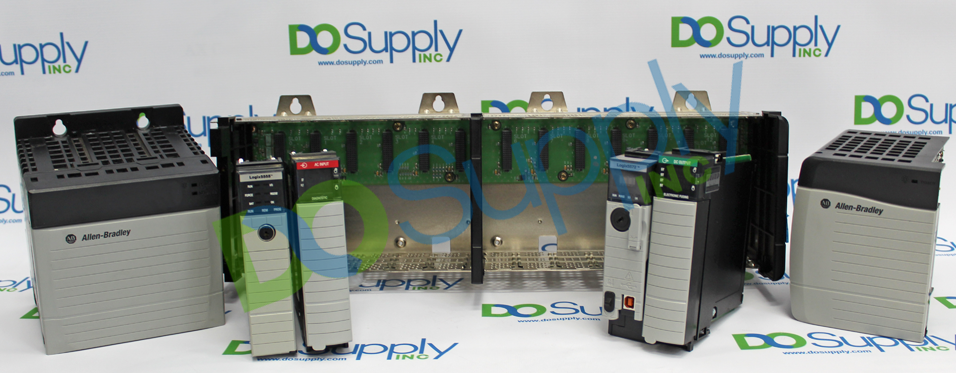
PLCs are available in various versions with different processing speeds, memory sizes, and input/output capabilities. They enable smooth integration with multiple sensors and actuators since they handle digital and analog inputs. PLCs also provide high-speed communication protocols like Profibus or EtherNet/IP, allowing quick data interchange with other devices in the automation network. PLCs are well known for being tough and durable, built to survive harsh industrial conditions. They have qualities like temperature resistance, electrical noise immunity, and industrial-grade enclosures that guarantee dependable functioning in challenging circumstances. PLCs may also be readily customized and expanded to fit the unique needs of a small factory. Additional input/output modules and communication interfaces may be seamlessly incorporated with the help of a modular hardware design, enabling scalability and future-proofing the automation system.
Human-Machine Interfaces (HMIs)
HMIs, which operate as the fundamental building blocks of a smart factory, are essential elements of industrial automation. HMIs provide cutting-edge technology and features that offer seamless human-machine interaction and communication. HMIs use touchscreen technology to interact directly between operators and the interface using simple movements like tapping, swiping, and pinching. This improves usability and makes operating simpler. Operators can quickly grasp data thanks to the visual attractiveness of real-time representations made possible by advanced graphics capabilities, such as vector-based graphics and animation. HMI’s interface to sensors, PLCs, and other control systems via communication protocols like OPC and MQTT enables real-time data sharing and integration. Through dynamic graphs, trends, and warnings, operators may view real-time data, process parameters, and system status, enabling effective monitoring and analysis.
HMIs also allow users to command devices directly from the user interface, enabling process start-up, parameter tweaking, and human intervention. Access to historical data is made available through data recording and analysis functions for performance assessment, troubleshooting, and optimization. HMIs improve operational efficiency, decrease downtime, and allow for informed decision-making thanks to their user-friendly interfaces, cutting-edge visuals, seamless connection, and variety of functionality. They are essential to industrial automation and help make a smart factory successful.
Sensors
The fundamental elements of a smart factory, sensors, are essential parts of industrial automation. They are necessary for many different areas of industrial operations because of their diverse functions and capacities. Temperature, pressure, humidity, flow rate, location, and other physical factors may all be measured via sensors. They provide accurate management and regulation of industrial processes by providing real-time feedback and monitoring. By examining characteristics and identifying flaws or variances, sensors are essential in assuring the quality of the final product. They also assist with machine health monitoring by identifying anomalies and enabling predictive maintenance to save downtime.
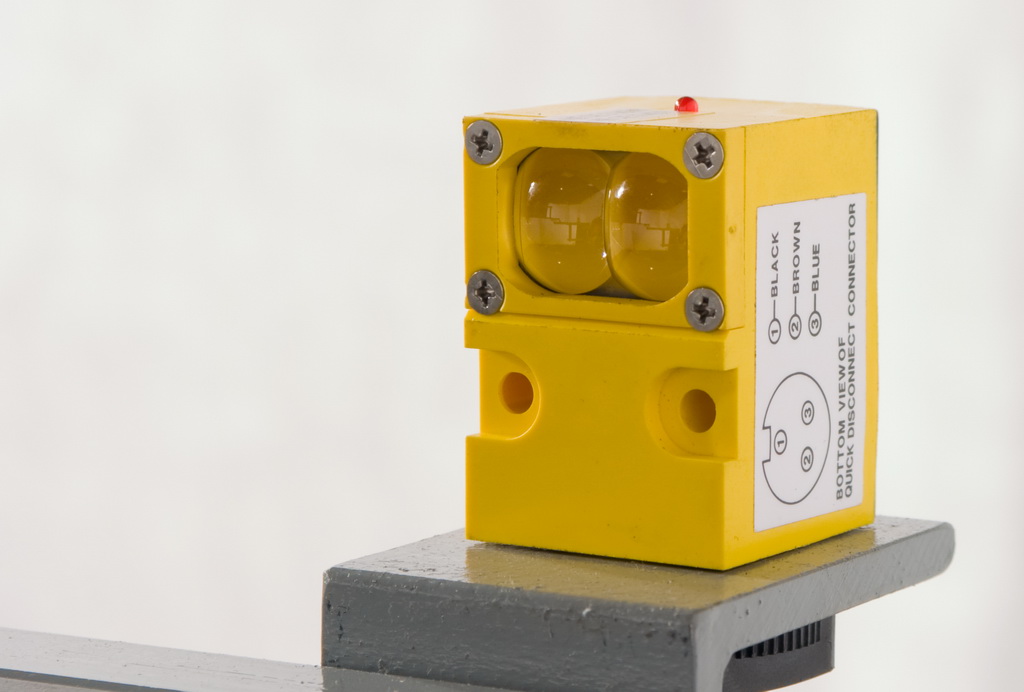
Sensors also support environmental monitoring to provide safe working conditions for personnel and equipment. Some of a sensor’s specifications include accuracy, precision, range, sensitivity, and reaction time. While the range and sensitivity dictate the detecting capabilities, high-precision sensors deliver precise and consistent data. Sensors are crucial to achieve the highest levels of performance, efficiency, and safety in industrial automation. They enable data-driven decision-making, process optimization, and increased productivity in the smart factory setting.
Actuators
Actuators serve as the physical mechanism to translate control signals into mechanical motion, making them essential elements of industrial automation and the foundation of a smart factory. For precise motions and movements, actuators use various features and technologies. One of their main uses is motion control, in which actuators produce linear or rotational motion to regulate the position, velocity, and acceleration of mechanical components. Industrial automation frequently uses technologies like electric actuators, hydraulic actuators, and pneumatic actuators to deliver coordinated and controlled movements. The creation of force and torque by actuators is essential for physical strength operations. In manufacturing and assembly processes, technologies, including electric motors, hydraulic cylinders, and pneumatic pistons, produce the necessary power and torque for gripping, lifting, pushing, and pulling.
Actuators utilizing technology like stepper motors, servo motors, or linear actuators are used for positioning and alignment operations. During assembly, calibration, and inspection procedures, these technologies provide exact positioning and spatial synchronization. Actuators use technologies like solenoids, electric motors, or pneumatic systems to control fluid flow, pressure, and direction of valves and flow. They make it possible to precisely regulate valves and dampers in fluid systems, guaranteeing effective fluid mixing, dosing, and distribution.
Using innovations like spring-loaded actuators, quick-release mechanisms, or fail-safe systems, actuators also play a critical part in safety and emergency responses. These technologies enable quickly activating safety features, emergency shutdown systems, and barrier defenses to protect people, property, and the environment. By combining actuators with their respective technologies, industrial automation systems enable accurate motion control, effective process regulation, and increased operational safety in a smart production setting. Electric, hydraulic, or pneumatic-powered actuators supply the required mechanical force, torque, and movement to advance automated operations.
Variable Frequency Drives (VFDs)
The foundational elements of industrial automation and the building blocks of a smart factory are variable frequency drives (VFDs). These advanced gadgets offer a wide range of features that help precisely control electric motors, maximizing performance and energy economy. VFDs provide extraordinary capabilities in industrial automation because of cutting-edge technologies and sophisticated mathematical algorithms. Adjusting frequency and voltage to regulate motor speed is one of the key mathematical ideas VFDs use. With pulse-width modulation (PWM) methods and other frequency control concepts, VFDs may accurately alter the frequency of the electrical signal sent to the motor. This mathematical operation controls the motor’s rotational speed, enabling precise control in various industrial applications.
Vector control techniques, which need intricate mathematical computations to ensure exact torque control, are also used by VFDs. VFDs may precisely manage the motor’s torque output using closed-loop or sensorless vector control techniques, providing optimum performance under various load scenarios. Regarding technology, VFDs use insulated gate bipolar transistors (IGBTs), a power electronics component, to transform input electrical power into outputs with changeable frequency and voltage. These quick-switching components help the motor be controlled quickly and precisely, which promotes dependable and efficient performance.
VFDs also provide several safety features, including over-voltage and over-current protection, which use mathematical algorithms to track and react to abnormal operating situations. These measures defend against damage and increase the lifespan of the associated motor and VFD by ensuring their safe and dependable functioning. VFDs offer unmatched control over motor speed, torque, and performance using modern power electronics technology and mathematical concepts, including frequency control, vector control, and complex algorithms. They revolutionize the functioning of smart factories across several sectors by utilizing cutting-edge technology and mathematical concepts, making them essential parts of industrial automation.
Communication Protocols
Industrial automation requires communication protocols, which lay the groundwork for smooth data transmission and control in a smart factory setting. These protocols allow devices and systems to communicate effectively and dependably, making it easier to monitor, manage, and coordinate activities in real-time. The Modbus protocol is a well-known and widely used communication system in industrial automation. In a master-slave architecture, a controller device initiates communication with several secondary devices. The Modbus protocol employs various mathematical techniques, including the cyclic redundancy check (CRC), to ensure data integrity while it is being sent. Another well-known protocol is the Ethernet/IP protocol, based on the widely used Ethernet communication technology. It gives flexibility and scalability by allowing communication and interoperability across devices manufactured by diverse suppliers. Ethernet/IP uses mathematical concepts like TCP/IP and UDP/IP to reliably and efficiently transport data across Ethernet networks.
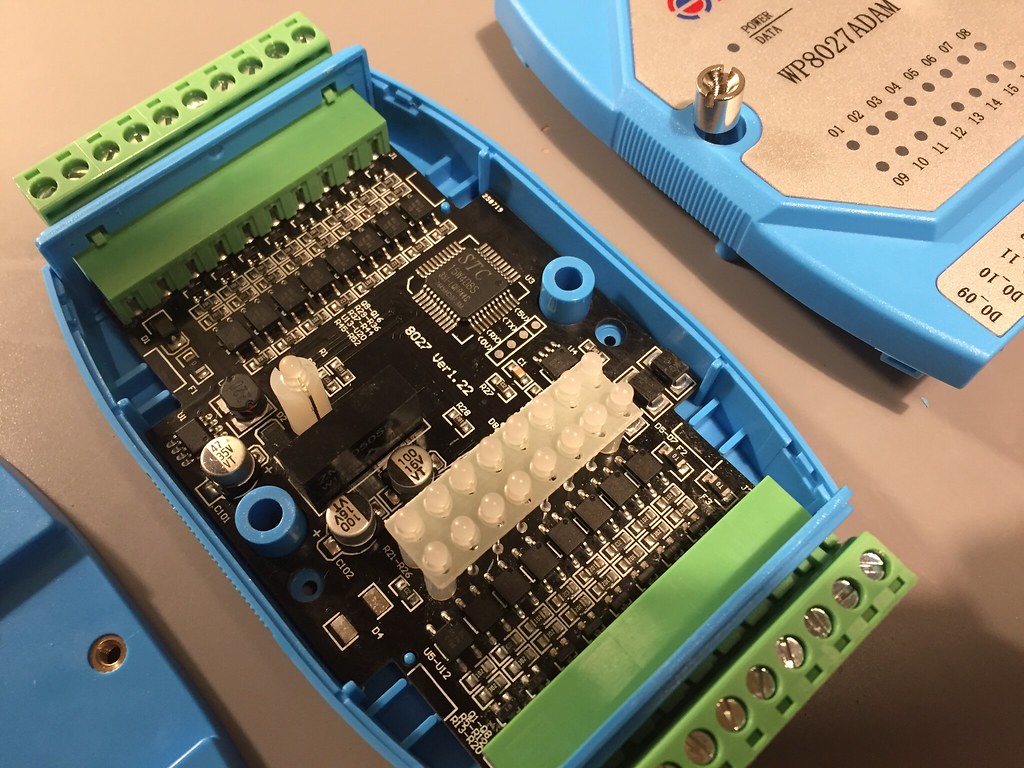
Profibus is another widely used protocol well known for its durability in industrial environments and high-speed communication. Mathematical approaches like token passing and cyclic redundancy check (CRC) are utilized for error detection and reliable data transfer. OPC (OLE for Process Control), a widely used standard for interoperability across multiple automation systems, and CAN (Controller Area Network), widely used in the manufacturing and automotive industries, are two more key communication protocols used in industrial automation. To guarantee precise data transport, error detection, and compatibility with various hardware and software, these protocols employ mathematical techniques and algorithms. Industrial automation significantly relies on mathematical concepts like CRC, token passing, and TCP/IP/UDP/IP to maintain data integrity, efficient communication, and interoperability. Industrial automation systems may achieve seamless communication, greater control, and improved coordination by using these protocols and the associated mathematical terminologies. In settings like smart factories, this leads to higher production, lower downtime, and optimized operational efficiency.
SCADA (Supervisory Control and Data Acquisition) Systems
To provide complete monitoring, control, and data-collecting capabilities, these systems make use of a variety of technologies. Remote telemetry units (RTUs) or programmable logic controllers (PLCs) that connect with field devices are some of the fundamental technologies SCADA systems use. These gadgets collect real-time data from sensors, meters, and other industrial equipment, sending the information to the main SCADA system for observation and evaluation. SCADA systems rely on communication technologies such as wireless networks, Ethernet, and Internet protocols to provide smooth connectivity between field equipment, RTUs/PLCs, and the central control center. These communication technologies make Real-time data transfer possible, which speeds up command and control.
Relational databases are frequently used in SCADA systems for data storage and retrieval, making it possible to store and access large volumes of historical data effectively. This makes analyzing trends, assessing performance, and producing meaningful reports for process improvement and decision-making easier. SCADA systems use cutting-edge graphical technologies, including vector graphics and web-based interfaces for visualization and human-machine interface (HMI). With the aid of these technologies, operators may view real-time data, alerts, and trends and process information on intuitive, interactive displays that are aesthetically pleasing and user-friendly.
SCADA systems also use cutting-edge cybersecurity technology to guarantee the confidentiality and integrity of industrial data. They include firewalls, intrusion detection systems, and encryption techniques to guard against unauthorized access, data breaches, and cyber dangers. SCADA systems provide smart factories with real-time monitoring, effective control, data-driven decision-making, and improved operational security by utilizing technology, including RTUs/PLCs, communication protocols, databases, visualization interfaces, and cyber security measures. They are essential to industrial automation, enhancing performance across several sectors by boosting production and efficiency.
Power Distribution Units (PDUs)
Power Distribution Units (PDUs) are essential building blocks of a smart factory and parts of industrial automation. To ensure effective and dependable power distribution, these devices provide various features and use cutting-edge technology. The intelligent PDU, which combines power distribution capabilities with sophisticated monitoring and control functions, is one well-liked PDU. These PDUs allow real-time monitoring of power parameters, such as voltage, current, and power consumption, using technologies like Ethernet, SNMP (Simple Network Management Protocol), and web interfaces. The Tripp Lite Monitored PDU and the APC Switched Rack PDU are two examples of intelligent PDUs. Another variation that includes metering capabilities for accurate power monitoring is metered PDUs. These PDUs use technologies like LCD screens, built-in web interfaces, and Modbus protocols to deliver precise real-time data on power use. The Server Technology Metered PDUs and the Raritan Dominion PX series are well-known examples.
Some PDUs also include sophisticated functions like outlet-level monitoring and control. These intelligent PDUs, including the CyberPower Metered-by-Outlet PDU and the Vertiv Geist Switched PDU, provide remote power control and individual outlet-level power monitoring, enabling fine-grained power distribution management to connected devices. To guarantee the security and dependability of power distribution, PDUs also use technologies like surge protection, circuit breakers, and power filtering. They could include clever load-balancing algorithms and energy management capabilities to optimize power utilization and lower energy expenses. PDUs offer effective power distribution, real-time monitoring, and intelligent control within industrial automation using technologies like Ethernet, SNMP, LCDs, and Modbus. They are essential in ensuring that key equipment receives a steady and secure power supply, and they also improve the efficiency and productivity of a smart manufacturing environment overall.
Final Thoughts
In conclusion, a smart factory’s fundamental building blocks are the essential elements of industrial automation. These elements—sensors, actuators, controls, software, communication protocols, and more—create a productive and smooth production environment. Industrial automation uses cutting-edge technology like PLCs, HMIs, VFDs, and SCADA systems to provide precise control, real-time monitoring, data collection, and process optimization. Increased production, fewer mistakes, higher safety, and improved operational efficiency across various sectors are made possible by integrating these components. Industrial automation revolutionizes conventional manufacturing processes and equips companies to remain competitive in the current era in industries ranging from medicines and energy production to automobiles and electronic devices. The importance of these essential elements in industrial automation will only increase as technology develops. The success of smart factories will depend on their ability to use these components to spur innovation, streamline operations, and reach new heights of production and efficiency. These technologies enable businesses in the industrial sector to increase productivity, save costs, and boost overall performance. With advances in machine learning, artificial intelligence, and the Internet of Things, industrial automation has untapped potential to revolutionize the production process. Businesses may start the transformational road towards a smart factory that is agile, intelligent, and ready for long-term success by adopting five essential elements.
DO Supply Inc. makes no representations as to the completeness, validity, correctness, suitability, or accuracy of any information on this website and will not be liable for any delays, omissions, or errors in this information or any losses, injuries, or damages arising from its display or use. All the information on this website is provided on an "as-is" basis. It is the reader's responsibility to verify their own facts.