PowerFlex DC Drives vs. Legacy Bulletin 1395: What’s actually Improved?
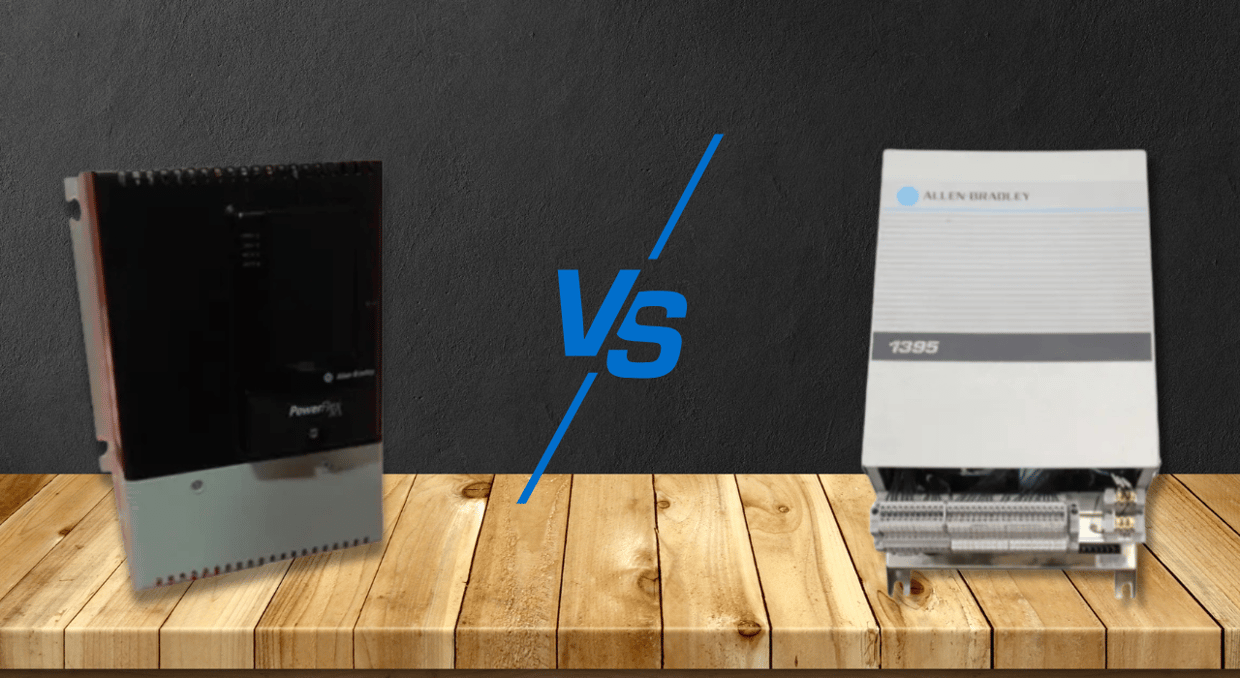
If you’ve spent any time around industrial DC motor systems, chances are you’ve crossed paths with the Bulletin 1395. Big, rugged, and almost deceptively simple, these drives were the workhorses of their day, handling anything from steel rolling lines to hoists and winders with little more than a hum and the occasional fan whine. The 1395 was the standard for years, not because it had bells and whistles, but because it didn’t need them. It worked, and it kept working.
But time moves on, and so does technology. Allen-Bradley’s PowerFlex DC drive lineup is the natural successor to the 1395, designed not just to replace it, but to rethink what a DC drive can offer in terms of performance, integration, and long-term reliability. That’s not just about throwing in a few extra features or making the packaging smaller. It’s about re-engineering the entire control experience while still serving the same heavy-duty applications.
Of course, it’s one thing to say something is “modernized” or “improved.” What actually changed? What are you really getting when you move from a tried-and-true 1395 to something like the PowerFlex 20P or 23PFC? That’s exactly what we’re going to unpack today.
Form Factor
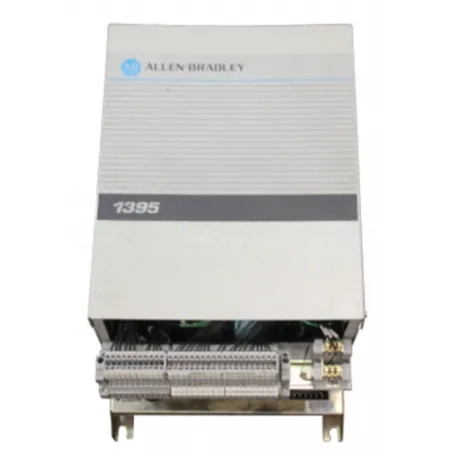
One of the biggest differences when you stand a PowerFlex DC drive next to a 1395 is the sheer size difference. The 1395, especially when spec’ed for higher horsepower, is built like a tank. Sure, it’s modular, but sprawling at that. A typical setup required plenty of cabinet space, along with careful planning for heat dissipation, external contractors, and the maze of analog and digital wiring that came with it.
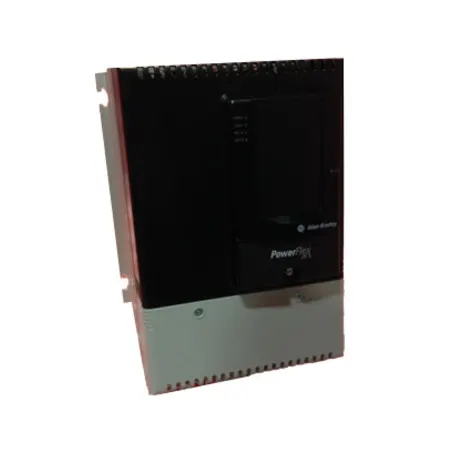
PowerFlex DC drives, on the other hand, are much more compact and streamlined. Take the 20P series, for example. Its enclosure options are designed with modern panel layouts in mind, often reducing the required footprint significantly. Internal bus structures, better airflow designs, and higher power density mean you can often do more with less cabinet space.
Control and Interface Options
The 1395 gave the user just enough: analog speed reference, discrete I/O, and maybe some limited keypad interaction. It made no promises about ease of use, often requiring the operator to jump through hoops for jumper settings, trimpots, and hand-labeling every terminal.
Compare that with a modern PowerFlex DC drive; the difference is night and day. Right out of the box, drives like the 20P or 23PFC come with a HIM that actually feels human. You can navigate parameters with soft buttons and a scroll wheel, get plain-language fault codes, and even copy and paste parameter sets between drives. There’s no mystery, no cryptic flashing LEDs, just clear feedback and straightforward interaction.
But it doesn’t stop at the keypad. The PowerFlex DC lineup supports a broad array of digital communication protocols without extra gymnastics. You’ve got options for EtherNet/IP, DeviceNet, ControlNet, and even Profibus through plug-in adapters. That means you can drop a PowerFlex DC drive into an integrated Logix system and pull diagnostics, adjust parameters, and monitor performance, all over the same network that runs the rest of your plant. If you still need traditional analog or discrete I/O, those are there too, but now they’re configurable, expanded, and far more organized. With the 1395, everything was fixed, and you had to adapt your control system to the drive. With PowerFlex DC, the drive adapts to you.
This shift from analog-centric hardware to digitally configurable architecture is where many users feel the biggest day-to-day improvement.
Diagnostics and Monitoring
When something is wrong with the 1395, it usually tells you, “Something is wrong, good luck.” Fault codes are basic and often cryptic, flashing through an LED display or forcing you to search through the manual. Troubleshooting involves pokeing around with a meter, checking voltages, and guessing which board might be the issue. In other words, diagnostics were reactive and hardware-dependent.
With PowerFlex DC drives, you’re handed a full diagnostic toolkit. Fault codes are plain-English, time-stamped, and logged for review. Many models include trend monitoring capabilities showing how a parameter changed over time before a trip event. So instead of chasing ghosts, you can look at a timeline and pinpoint the cause, whether it’s a fluctuating speed reference, a failing encoder, or a motor overload that’s been creeping up for days. Not to mention using the HMI to see logs and fault history.
Performance and Tuning
The 1395 drive, during its prime, was quite impressive for its time. It featured multiple tuning layers, such as current loop, velocity loop, and field flux tuning. With an ecoder or DC tachometer feedback, tight regulation was achieved at 0.1%. However, configuring these features meant scrolling through numerical parameter tables using RS-422 terminals. It worked but required patience.
On the PowerFlex DC side, drives like the 20P series come ready with auto-tuning routines for fast, accurate commissioning, even with complex load setups. Whether you’re regulating torque or maintaining a constant line speed under shock load conditions, PowerFlex DC can automatically identify the motor parameters and adjust control loops, reducing setup time from hours to minutes. Speed regulation is no longer just a matter of guesswork and graph paper. PowerFlex DC drives offer:
- 2000:1 RPM range with armature feedback
- Up to 0.1% speed regulation with either an encoder or DC tachometer
- +-1% torque regulation in closed-loop mode using encoder feedback
Even open-loop torque regulation is tighter now, hitting +-5%, and encoder-driven control allows for full load hold at zero speed, which the 1339 couldn’t achieve without adding external systems or workaround logic.
Beyond the raw specs, PowerFlex DC drives add higher-speed analog inputs, digital PI process control, and built-in features like TorqProve, which helps synchronize drive control with mechanical brakes. You also get flying start capability, allowing a smooth handoff when catching a spinning load, regardless of direction or speed.
Tuning on the 1395 could certainly be mastered, and many plants still swear by its rugged reliability. But when you compare that to the hands-off precision, speed, and modern responsiveness of the PowerFlex DC series, it’s clear that the new generation isn’t just easier, it’s more capable and consistent, especially in demanding, dynamic applications.
Regeneration and Efficiency
The 1395 and PowerFlex DC drives are capable of full four-quadrant operation, meaning they can handle motoring and braking in forward and reverse and feed power back to the line during overhauling loads. This is a key reason these drives have remained staples in applications like winders, elevators, and deceleration-heavy systems. However, as with most things, handling regeneration makes a big difference in performance and efficiency.
The Bulletin 1395 uses a 12-SCR regenerative bridge for armature control with full-wave field regulation. It’s a robust setup, but by today’s standards, it’s also fairly brute-force. The firing logic can cause harmonics, and regeneration is limited by how quickly the drive can switch conduction states across the SCRs. While effective, it comes at a cost in terms of efficiency and power quality.
PowerFlex DC drives take the same principle but refine it. The 20P and 23P models feature faster current-limited regeneration with voltage foldback, which keeps the motor and drive within safe operating margins while minimizing energy loss. Built-in voltage and current regulation loops ensure that acceleration and deceleration are smooth, even under heavy load, and the drive reacts quickly to changing system demands without nuisance tripping.
Where the PowerFlex DC series really pulls ahead is in power quality and energy efficiency. These drives are equipped with fast-acting IGBTs on the field converter (depending on model), improved firing control on the SCR bridges, and integrated diagnostics that monitor regen performance. PowerFlex drives also offer better handling of capacitive energy in long deceleration ramps, and some configurations are compatible with external energy storage or dynamic braking for overflow conditions.
From a systems perspective, this means:
- Less waste heat during deceleration
- Better line-side harmonic performance (especially when paired with isolation transformers or line reactors)
- Reduced chance of voltage overshoots on shared DC buses
- Smoother transition between motoring and braking states
In contrast, legacy 1395 systems often require external braking resistors, chokes, and additional tuning effort to achieve comparable stability, especially in systems where load inertia changes frequently or regeneration is constant.
Final Thoughts
For its time, the 1395 was ahead of the curve with its robust regenerative control, modular construction, and enough horsepower to tackle the most demanding DC applications of its era. Just like the 1336 PLUS II, it now follows the “if it ain’t broke, don’t fix it” legacy. Though with the new PowerFlex 20P line, you’re getting a system designed for faster commissioning, tighter regulation, better safety compliance, and seamless integration into modern control networks. It’s quieter, lighter, and more efficient without losing any of the core capabilities of the 1395. Or if youre considering moving to AC drives, we have an article here to help!
Making the step forward to the new age of drives doesn’t have to be daunting. We at DO Supply are committed to making it as easy as possible, and we have many drives in our inventory waiting to update your system. All it takes is a call to get things rolling, so don’t wait!
DO Supply Inc. makes no representations as to the completeness, validity, correctness, suitability, or accuracy of any information on this website and will not be liable for any delays, omissions, or errors in this information or any losses, injuries, or damages arising from its display or use. All the information on this website is provided on an "as-is" basis. It is the reader's responsibility to verify their own facts.