The Science Behind Soft Starting: Why AC Drives Prevent Motor Damage
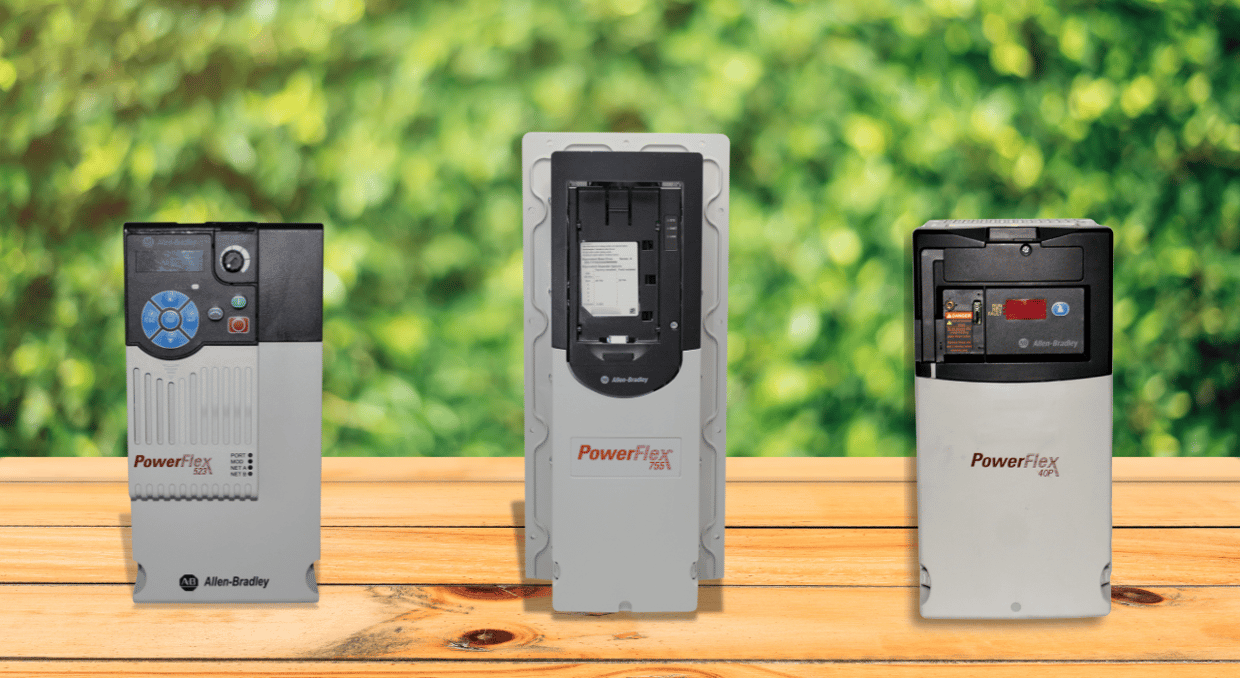
No matter the purchase, reliability is often one of the top deciding factors, and when it comes to automation, it’s tied directly to uptime and maintenance costs. When considering an automated process, reliability prevents costly downtime and unexpected repairs. Even a robust motor can break down if it’s subjected to the wrong startup conditions or poorly configured controls. Likewise, many different features and options are meant to prevent damage to the motor and keep it running as smoothly as possible. Some modern drives will even estimate the end of life for your equipment. Today, we will explore the features and options available with modern AC drives, specifically the PowerFlex series by Allen-Bradley, and explain how they help prevent unnecessary motor damage.
Overload Protection
Overload protection is a fundamental feature in modern drives that helps guard against prolonged overcurrent that can overheat the motor windings. If this overcurrent condition persists for too long, the drive will trip before the motor is damaged. Different classes pertain to the length of time before the drive trips:
- Class 5 trips in 5 seconds or less. This is for highly sensitive loads that must start quickly. This is uncommon for most standard applications.
- Class 10 trips in 10 seconds or less. These are used for general-purpose motors or motors requiring quick protection. Most PowerFlex drives ship with this as the default; however, users can adjust it to Class 20 or 30 depending on the motor’s load profile and startup behavior.
- Class 20 trips in 20 seconds or less. This offers more time before tripping for applications that might experience high inrush currents for slightly longer periods, where nuisance tripping needs to be avoided.
- Class 30 trips in 30 seconds or less. This is for motors driving high-inertia loads that require more time to accelerate to full speed.
An overload condition can be caused by several factors, including heavy loads, high friction in the motor’s bearings, or even vibration issues from harmonics. While motors may briefly draw 6 to 8 times their full load current during startup, overload protection monitors sustained overcurrent, typically in the range of 105% to 120% of the rated current, and trips if that level persists beyond the class-defined time.
Voltage and Phase Protection
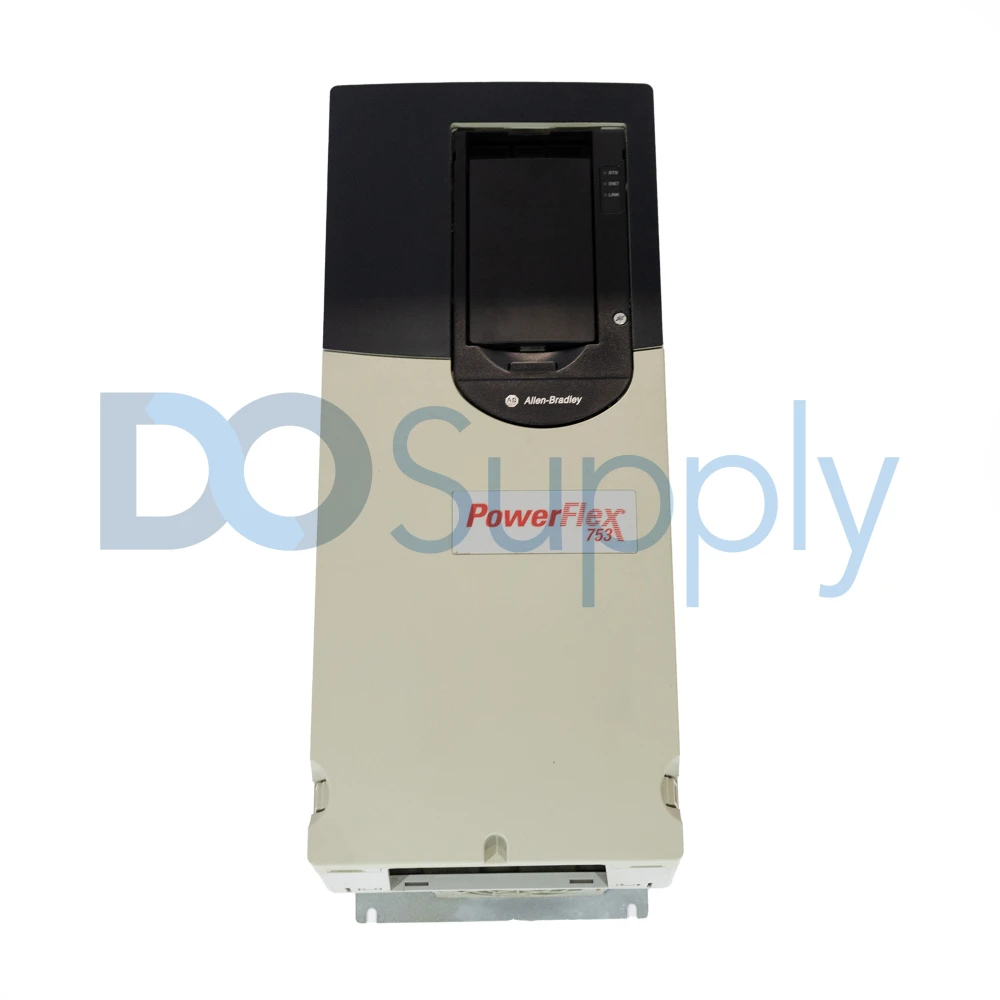
Not all damage comes from the load side. Sometimes, the problem begins right at the power supply. Modern AC drives like those in the PowerFlex family include built-in protections that watch for irregularities in the incoming power. These faults might not cause immediate failure, but over time, they stress motor insulation, increase heat generation, and create inconsistent torque, all contributing to shortened motor life.
Undervoltage and Overvoltage Protection
AC motors require a relatively stable voltage to run efficiently. When the supply voltage drops below a certain threshold, known as undervoltage, the motor has to draw more current to maintain torque. That extra current means more heat in the windings and drive output stages, accelerating wear. Conversely, overvoltage can push insulation beyond its rated limits and cause premature dielectric breakdown.
PowerFlex drives monitor the DC bus, which is the internal conversion point between AC input and motor output, and will fault if it falls outside a safe range. For example, in a 480V system, bus voltage typically hovers around 650V DC. If it rises or drops too far (say, during grid switching or lightning strikes), the drive either shuts down or coasts the motor to a stop, depending on how it’s configured. This would need to be configured in the drive’s settings beforehand, like Power Loss Mode or Half Bus Mode if your drive supports it.
Phase Loss and Imbalance Detection
Three-phase motors need all three phases to be healthy and evenly balanced. If one phase is lost, maybe due to a blown fuse, loose connection, or upstream fault, the motor can still run, but it does so at a disadvantage. It vibrates more, draws excessive current through the remaining phases, and suffers from torque ripple, which damages bearings and heats the stator.
PowerFlex drives continuously check for missing or imbalanced phases. When they detect a problem, they can alert the user, reduce output power, or trip entirely, depending on the severity. This protects the motor and can prevent cascading failures across a whole machine.
Stall Protection
When the motor is powered but not turning, something is seriously wrong. Stall conditions usually mean the load resists motion beyond what the motor can overcome. This can happen with jammed conveyors, seized pumps, or broken mechanical linkages. If left in this state, the motor draws excessive current and can overheat the windings and drive output components.
Modern PowerFlex drives use a combination of speed feedback (when available) and current monitoring to detect a stall condition. If the motor current rises sharply above expected levels while the speed remains low or zero for too long, the drive recognizes that something’s wrong. It can then shut down the system, send an alarm to a controller, or trigger an output to alert maintenance.
This feature becomes even more valuable when paired with acceleration profiling. If a motor is expected to reach 100% speed within 3 seconds but hasn’t crossed 30% after 2, the drive knows it’s stuck. Rather than waiting for an overload fault or risking a full trip, stall detection allows a faster and more targeted intervention.
PowerFlex 753 and 755 models offer adjustable stall detection parameters, allowing users to define current, speed, and delay time thresholds. This customization ensures the feature fits the dynamics of the machine without triggering nuisance trips during heavy, but healthy, startups.
Stall detection is a critical line of defense in environments where mechanical jams can occur, like packaging lines, feed hoppers, or even garage door openers. It protects the motor, the drive, and the load from serious wear or complete failure.
Adaptive Tuning and Control Loop Compensation
Every motor and load pairing has its quirks. Some loads have high inertia, others are springy or prone to backlash. Even things like belt wear, bearing drag, or environmental heat can change how a motor behaves. Traditionally, fine-tuning a motor controller for a particular setup required trial-and-error adjustments to PID gains and compensation parameters, which is a time-consuming and skill-heavy task.
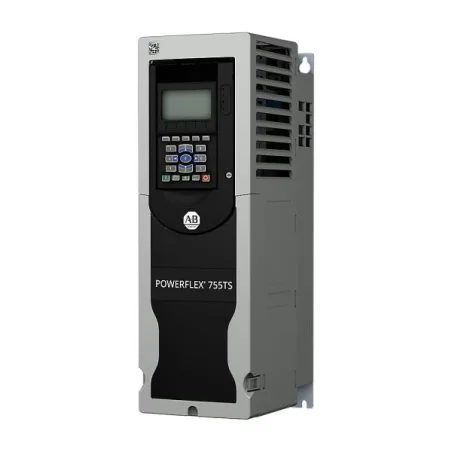
That’s where adaptive tuning steps in. On drives like the PowerFlex 755TS, the control system continuously monitors how the motor responds to commands, looking at things like acceleration lag, overshoot, and load disturbances. As it notices changes, from rising friction to a loose coupling, it retunes its control loop in real time.
This is especially helpful for preventing damage in systems where conditions don’t stay constant. For example:
- A conveyor carrying different product weights over a shift
- A mixing motor that experiences variable viscosity
- A hoist that gradually wears its brake pads
Without adaptive tuning, these kinds of changes could lead to overshooting, oscillations, or motor hunting, all of which cause stress on both mechanical and electrical components. However, with active adaptive tuning, the drive makes small gain adjustments to keep the system stable and responsive without user intervention.
It also acts as a preventative layer. If a motor starts oscillating or behaving erratically due to mechanical issues, adaptive control can compensate, or at the very least flag it, before it becomes a bigger problem. This reduces long-term stress on the motor shaft, coupling, and drive output stage.
For users who don’t want the system to adjust automatically, drives like the 755 series also offer auto-tuning at startup. This one-time test applies a controlled signal to the motor, measures the response, and sets appropriate gains to offer a solid baseline even before the motor begins regular work.
Final Thoughts
There is a wealth of features out there to safeguard motors during operation. Keeping motors healthy in a system is key to helping prevent unexpected and costly downtime. While we didn’t go over all of them, the PowerFlex lineup really does have some impressive technology, especially when it comes to TotalFORCE. If we don’t cover what you need, feel free to give us a call, and we can have our experts help recommend a drive fit for your application. We also do repair motors and drives, all backed by a two-year warranty to keep it worry-free. We also have a blog just like this one that goes deeper into making the system more efficient with smart motor controllers over here.
DO Supply Inc. makes no representations as to the completeness, validity, correctness, suitability, or accuracy of any information on this website and will not be liable for any delays, omissions, or errors in this information or any losses, injuries, or damages arising from its display or use. All the information on this website is provided on an "as-is" basis. It is the reader's responsibility to verify their own facts.