CNC Machine Parts: Servo vs. Stepper Motors
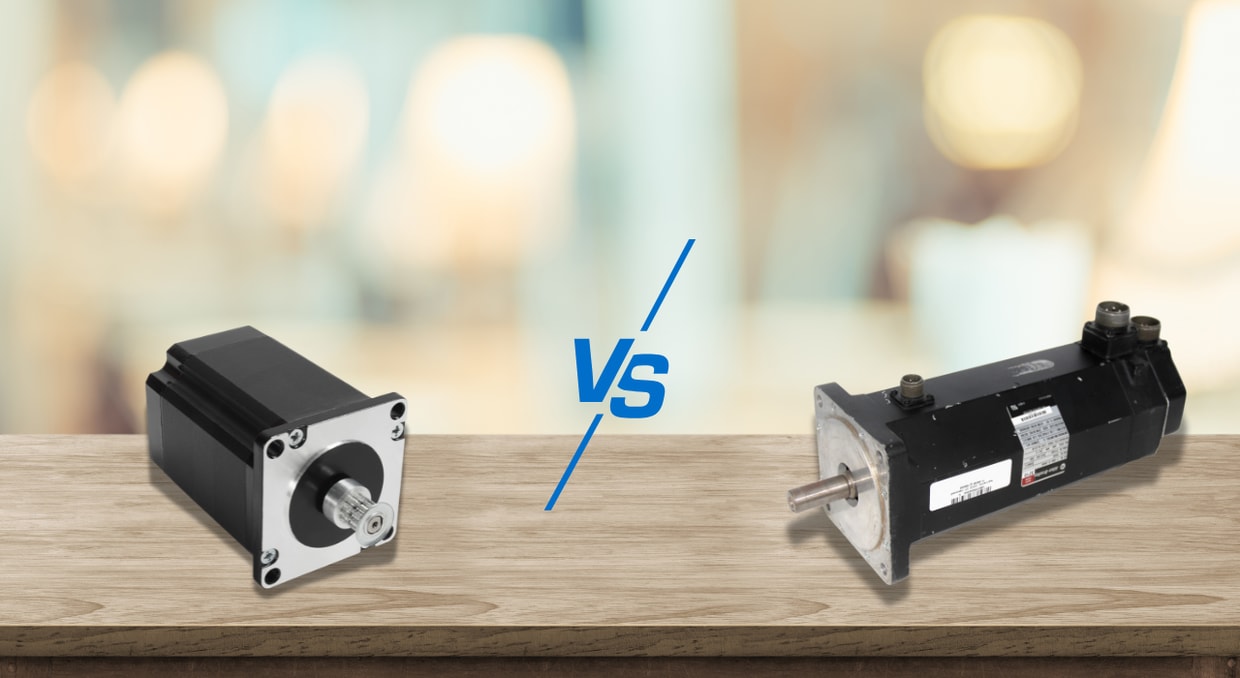
Your core CNC Machine Parts choices are among the most critical factors to determine, from a performance, precision, and cost perspective, for engineers, machinists, and procurement specialists alike. Drive motors are among the most essential CNC Machine Parts. The choice between servo and stepper motors has always been a discussion in the design and selection of a CNC system. Today, we will go over each one and see what applications allow one to shine over the other.
The Foundational Role of Motors in CNC Systems
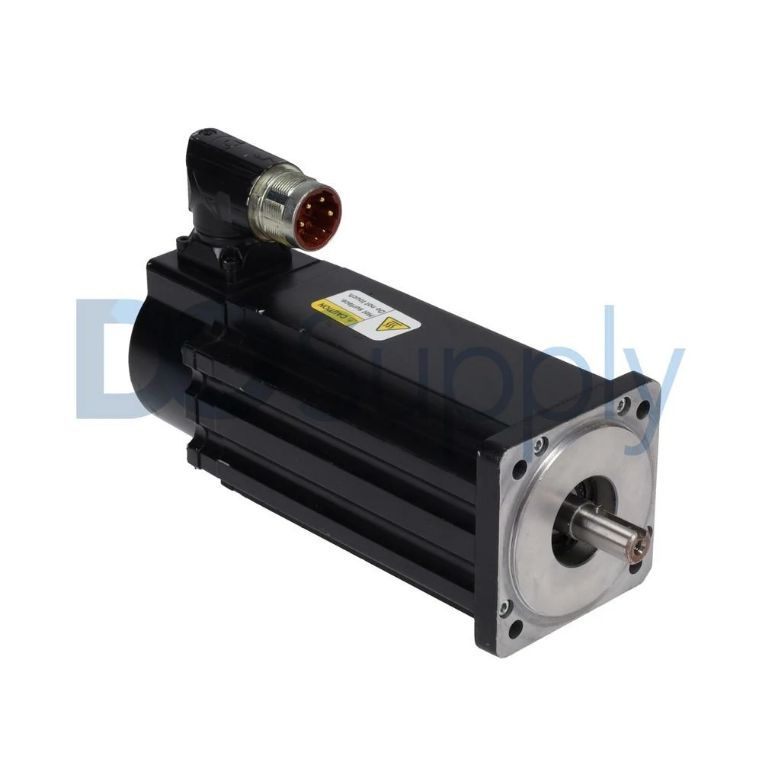
Before delving into the specifics of stepper and servo systems, it is essential to understand their role. These motors are the prime movers, the components that translate digital commands into precise physical motion. The choice between a stepper motor and a servo motor influences every aspect of a machine’s capabilities, from its maximum speed and cutting torque to its positioning accuracy and operating cost. Selecting the correct motor from the vast array of CNC machine parts is therefore not merely a technical matter but a strategic business decision that affects throughput, quality, and return on investment.
Stepper Motors
Like other motors, stepper motors have unique features that stand out. It is built with a stationary stator made of copper windings and a rotor containing permanent magnets. When the copper windings are subjected to an electric current, the winding structure generates a magnetic field. Magnets will cause the rotor to rotate with the field in discrete angular steps as the rotor continuously hits each pole. The motors obtain feedback from their high number of magnetic poles and operate in an open-loop control system, though when paired with an encoder, they can operate in a closed-loop system.
The number of poles in the motors is also reflected in their ability to generate high torque at either a very low position or at zero position. Depending on the mechanics and commercial use, stepper motors are also much more compact and offer a lower initial investment than servos.
Performance Limitations and Considerations
There are some problems with these motors, though. Speed is one of the biggest problems since they work best at or below 1,200 RPM. The speed at which a motor runs and the torque produced by it are both interlinked. If a motor made 100 oz-in of torque but didn’t move, that amount would drop to less than half at 500 RPM and only 10 oz-in at 1,000 RPM, which is why these motors are not recommended for high-speed applications. Adding a gearbox to the system can increase torque but will also reduce output speed. If a motor with 1,200 RPM had a 10:1 gear reduction, the output speed would be about 120 RPM. This would make it too slow to drive ball-screw actuators or similar mechanical systems.
Stepper motors cause high vibration levels and face resonance problems. This comprises the surface quality, shortening the life of the parts. They also get hot because they always send out a steady current, even when the part isn’t holding a load, and they don’t change their output when the load changes suddenly.
Ideal Applications for Stepper-Based CNC Machine Parts
Stepper motors are a great choice for jobs that require low-speed operation, moderate acceleration, and high positioning accuracy because they are cheaper than other motor types. For example, they are great for X-Y positioning tables on smaller machines and for conveyors in production systems, where they need to move at a steady, controllable speed. Drives that use micro-stepping techniques are best for moving sensitive parts like circuit boards or semiconductors because they reduce vibration and make transport safer. Their ability to stay in the same spot is also important for the accuracy needed in industrial robot joints.
Servo Motors
The difference between a servo motor and a stepper motor is that the latter has more poles, which creates fundamental operational differences between the two. For instance, stepper motors have between 50 and 100 poles, while servo motors have about 4 to 12. This low pole count in servo motors means they cannot step in simple sequences and must operate in a closed-loop control system. As such, servo motors are purposefully built to operate at high speeds, often in excess of several thousand RPM, making them ideal for applications that require high operational speeds. To maintain a consistent torque, a servo motor must keep a relatively constant output speed throughout its engagement.
The Closed-Loop Advantage in CNC Machine Parts
It is the presence of an encoder that sets a servo system apart from the rest and enables the highest performance. With the encoder, a constant feedback loop is created in which the drive continuously measures and compares the commanded position with its actual position. This can be visualized when picturing a GPS in a car. If a driver makes a wrong turn, the GPS immediately finds a new route and gets the driver back on track. If an obstacle occurs in the system, like a piece of material getting stuck between the gantry and the table, the servo motor with the feedback quickly detects the error, like a torque spike, stops, and recalibrates to avoid a catastrophic failure. A stepper motor in the same situation, without feedback, would just lose steps and continue to drive the system incorrectly, thereby ruining the expected workpiece.
Due to the feedback loop, servo motors can operate under a variety of loads and perform best with short bursts of peak torque to overcome inertia. Unlike a stepper motor, a servo motor has no set “holding torque”. The closed-loop system just keeps telling the load to stay in position, issuing tiny commands that build up into an effective holding force.
Performance Capabilities and Trade-Offs
Because servo motors use strong rare-earth magnets, they can generate high torque in comparably small packages. These motors come in a variety of sizes, ranging from NEMA 17 to 220mm in diameter, and can deliver very high torque, with some reaching as high as 250 ft-lbs. These and less powerful models operate more efficiently and generate less heat in variable-load applications. However, high performance comes at a high cost in multiple ways. The need for an encoder, an advanced driver, and, usually, a planetary gearbox significantly increases initial costs. These high levels of intricacy can increase the risk of mechanical complications, leading to more expensive maintenance and repairs in the long run.
Ideal Applications for Servo-Based CNC Machine Parts
Because servo motors perform very well, they are the best choice for very high-performance CNC Machine Parts. They are critical to CNC milling machines, lathes, and grinders in the metal fabrication industry and are important in all CNC machines. Their power, speed, and precision are very important in this industry. They are also used in robotics, one at each joint in a complex robot to provide the precise control and actuation needed for powerful and delicate movements. Their use in the food industry, pharmaceuticals, and in-line manufacturing is also important due to the need for precise and reliable movements. Outside industrial settings, servo motors can be found in everyday items such as DVD players, automotive cruise control systems, and radio-controlled devices.
Conclusion
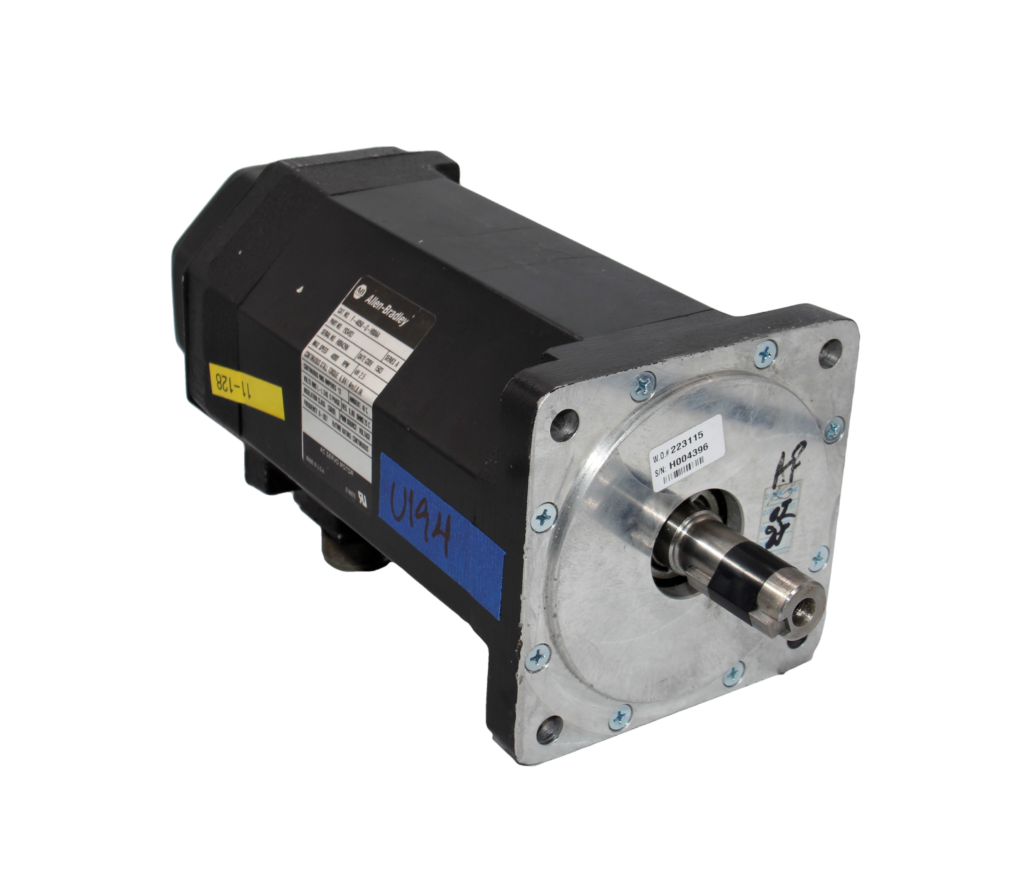
For less dynamic, lower-speed applications, stepper motors are the most economical and simplest-valued solution. When applications are highly demanding and require exceptional speed and precision, servo motors are a reasonable option, as they offer high cost and throughput. CNC parts are widely available, such as these MDS spindle drives from Mitsubishi or Allen-Bradleys 8510 AC spindle drives. We also carry Allen-Bradley servo motors, just like the F series here. Stop by our site today to see the different motors and drives we have available to power your CNC project, or just to check out what other automation supplies we carry. As always, thank you for reading!
DO Supply Inc. makes no representations as to the completeness, validity, correctness, suitability, or accuracy of any information on this website and will not be liable for any delays, omissions, or errors in this information or any losses, injuries, or damages arising from its display or use. All the information on this website is provided on an "as-is" basis. It is the reader's responsibility to verify their own facts.